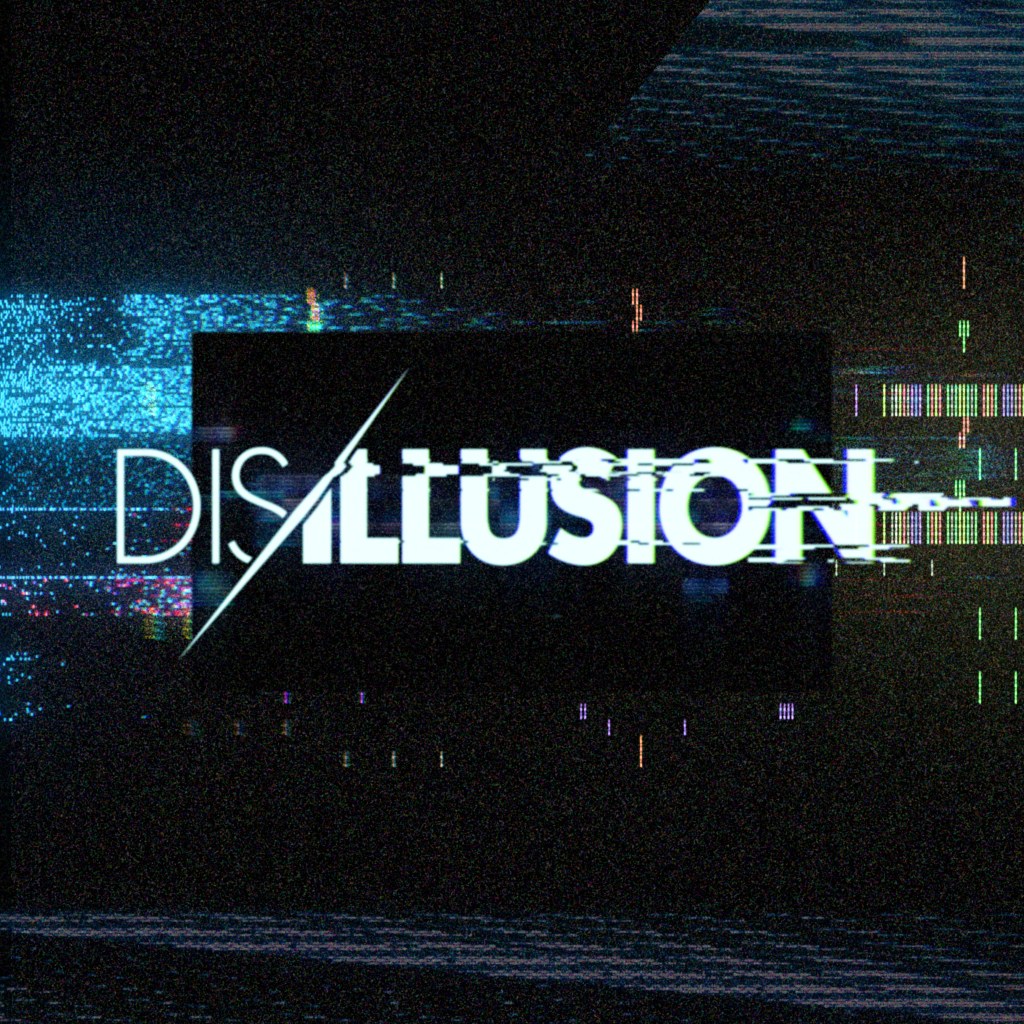
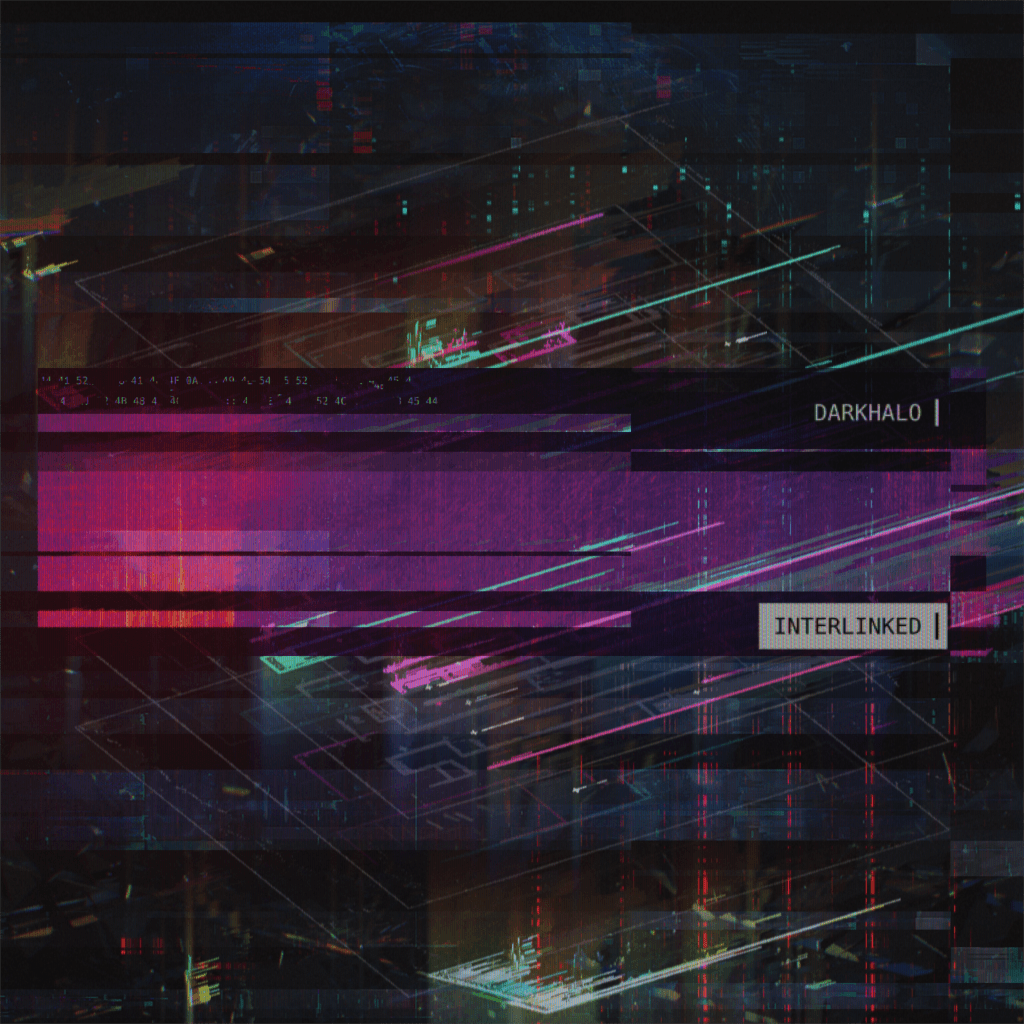
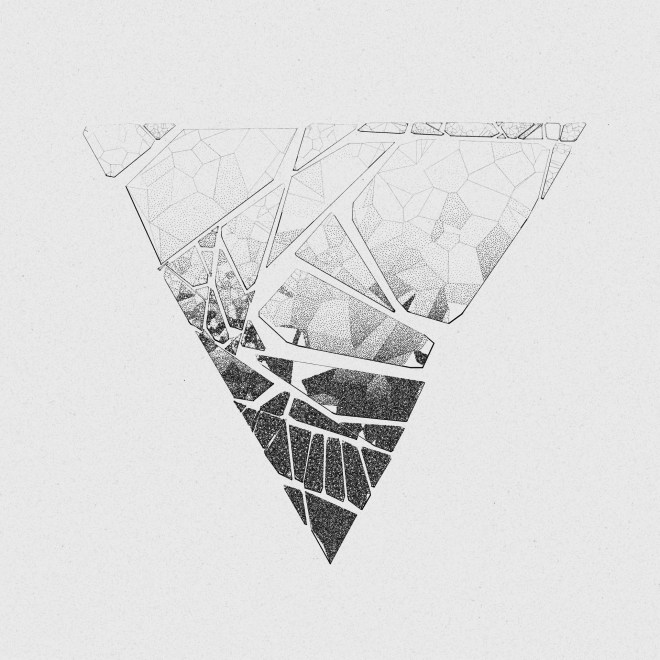
As mentioned in my last post, this album is in some ways a counterpoint to my previous release; while Interlinked (2024) was more intimate and hopeful, much of the feelings that fueled DISILLUSION resulted from experiences and observations of tension and challenges over the past couple years, both on personal and societal levels respectively. Rapid change, chaos, overwhelm, saturation, helplessness and nihilism met in equal measure with a defiant will to push back and fight for what’s genuine and beautiful and worthy of effort. I think it’s the intersection of all of these things – the pressure and violent collision of these opposing ideas – that I ended up channeling into these tracks. As a result I’d say it’s a bit more aggressive and noisy than anything I’ve made since Metamorph (2020), though still not without its contemplative and hopeful moments.
Looking back from here on my process, I almost never start with a clear concept and carry it through to completion. Having the luxury of time to spend on a hobby like music allows me to do whatever I want with it and the result for me is a fulfilling and subtly cathartic expression of whatever I’m feeling at the time – oftentimes something I would struggle to even put into words. So every couple of years when the timing feels right and I compile the best of my efforts together into some kind of cohesive whole it’s interesting and somewhat illuminating to see the through-line develop, almost like reading back through a very abstract journal.
On the technical side, I experimented with multiple approaches this time around. With a Push 3 standalone I tried some “dawless” style sketching and production with the Elektron Syntakt and Digitone, Moog Labyrinth, DFAM and Subharmonicon (“infinity”, “memento”), but also did a lot of daw-only production using some of the amazing Fors m4l and vst instruments (“succumb”, “spellbind”, “risk”). Also quite recently got an Ableton Move which formed the basis for “acceptance”. Aside from Live’s stock instruments and effects though I think my most-used piece of hardware continues to be the unassuming Arturia Minifreak (owing in no small part to its complementary 1:1 vst). On “sphere” I took one of the tracks from my Sonic Sanctuary Live Set and brought it to a more polished level, which was another new approach for me. Overall I think working with different instruments, layouts and techniques helped keep things fresh and interesting, avoiding same-y ruts that I’ve fallen into before, and likely something I’ll continue to try moving forward.
Man it’s been awhile since I’ve updated here. Hard to believe my last update was almost two years ago. I’ve got so many thoughts and things to update that it’s hard to know where to start, which I suppose has been compounding the problem of not updating. But it seems the stars have aligned in terms of circumstances and motivations to dust off this old blog, so let’s see if I can form some kind of a coherent post here.
Let’s start with my primary focus of these last two years, Hades II. Somehow I neglected to even update here both at the initial announcement and the Early Access release. But 1.0 has been out for a couple months now on Steam and Switch/Switch 2, and I’ve been grateful to see such a positive reception of it overall. Having contributed meaningfully to a game that now sits within Metacritic’s top 20 PC games of all time feels like some kind of lifetime achievement to me, beyond what I’d ever imagined.
As a kid who was awed by visual effects in games, I remember thinking that some day I wanted to work on games that gave me that same indescribable feeling where the orchestration of all of its disciplines meld into a unified and memorable, bordering on spiritual experience, becoming much more than the sum of its parts; that if I could work on something that was as inspiring to others as I felt, it would be a meaningful career. Seeing so much positive feedback around this release has felt like a resounding confirmation of that dream.
At the same time, the fulfillment of that dream has come at some cost. While I generally stick to a 40-hour work week, in hindsight I also put a lot of pressure on myself and have been hyper-focused during those hours, which isn’t easy to simply switch on and off (especially when working from home.) Since I really have the flexibility to set my own goals I’ve tended to default to prioritizing my own high ambitions, especially considering the degree to which work ethic and drive are generally valued in our (western, silicon valley) culture.
Part of what I’ve learned from this project is that self-discipline is more than just prioritizing work and doing the hard things first, it’s also finding balance and knowing when to let go of ambition. And I don’t think the two are incompatible – “working smarter not harder” for example by trusting the player’s imagination rather than spelling everything out visually has been something on my mind during this project as well, and perhaps something to carry into the next.
I may have more to write specifically about my VFX work on the game at a later point, maybe even some animation breakdowns or other insights, but for now I’ll move on to some more personal work.
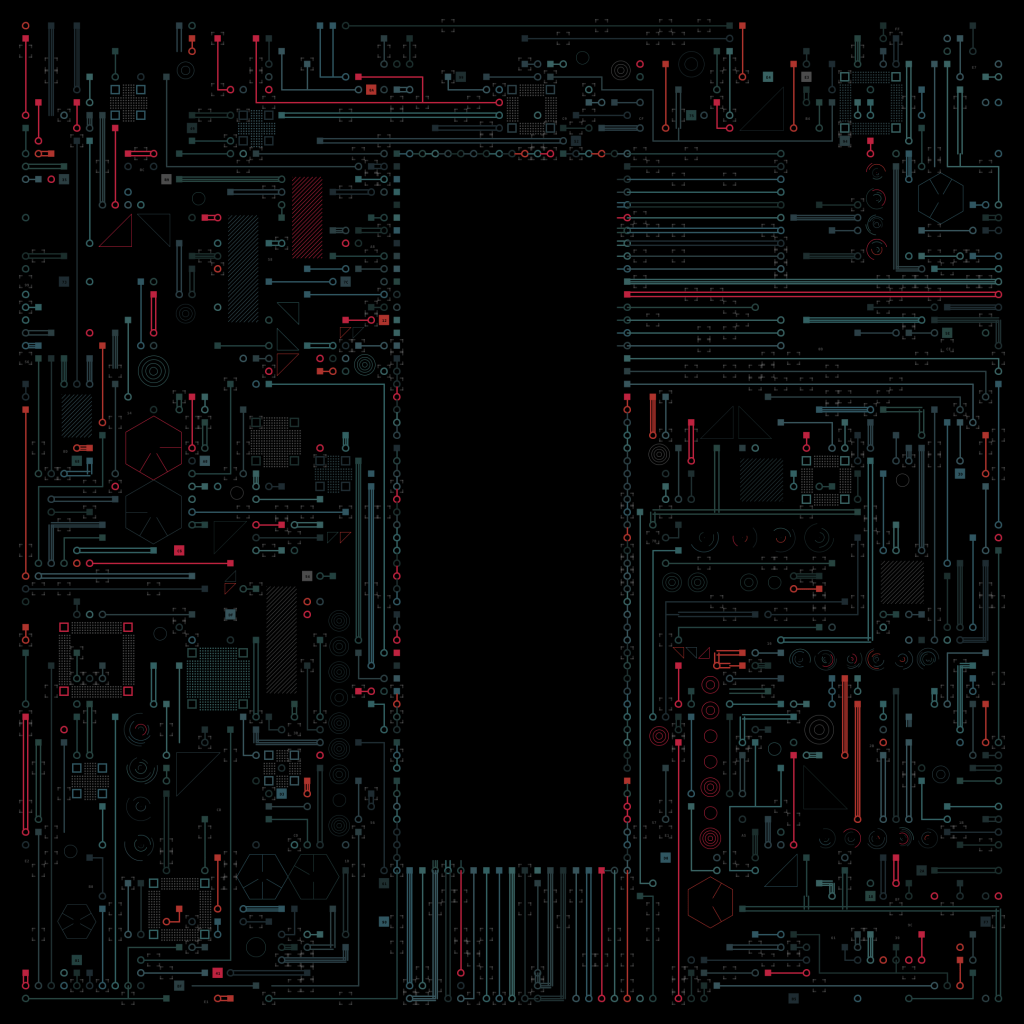
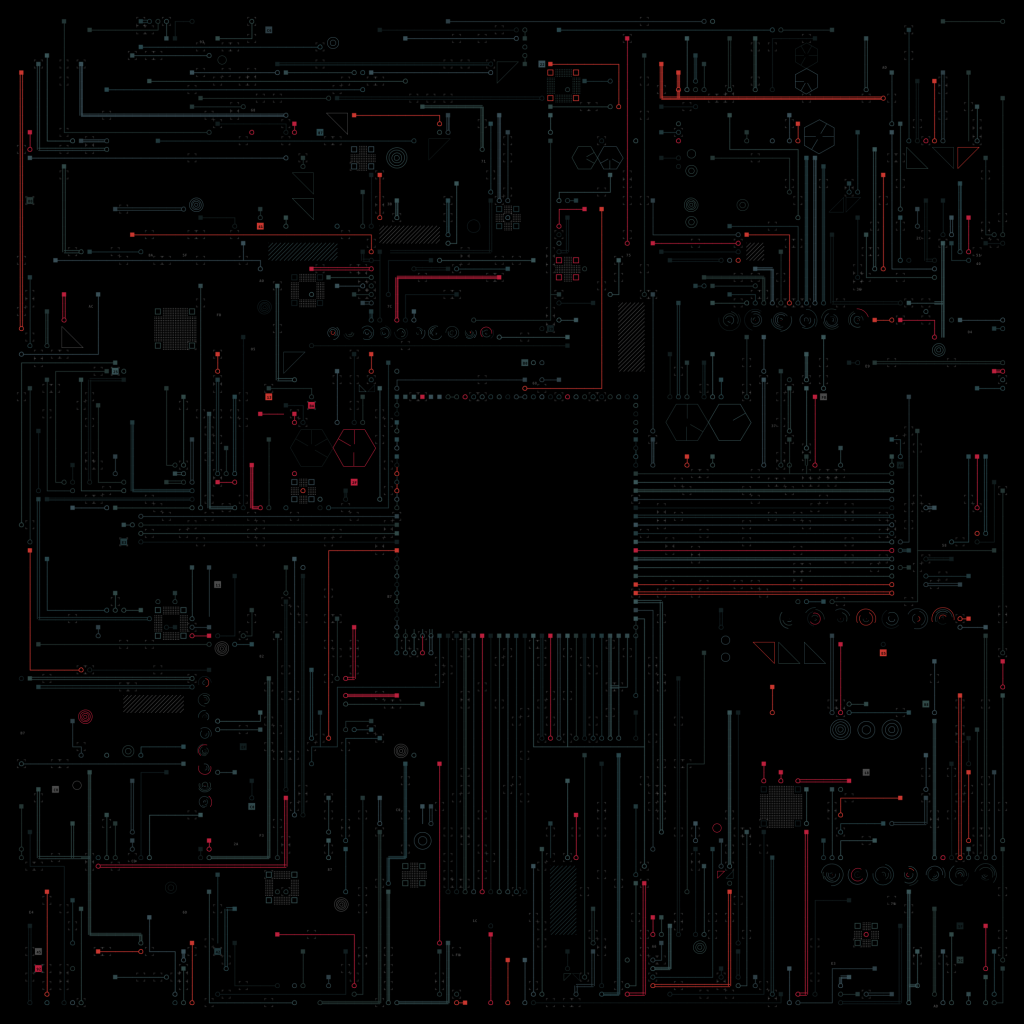
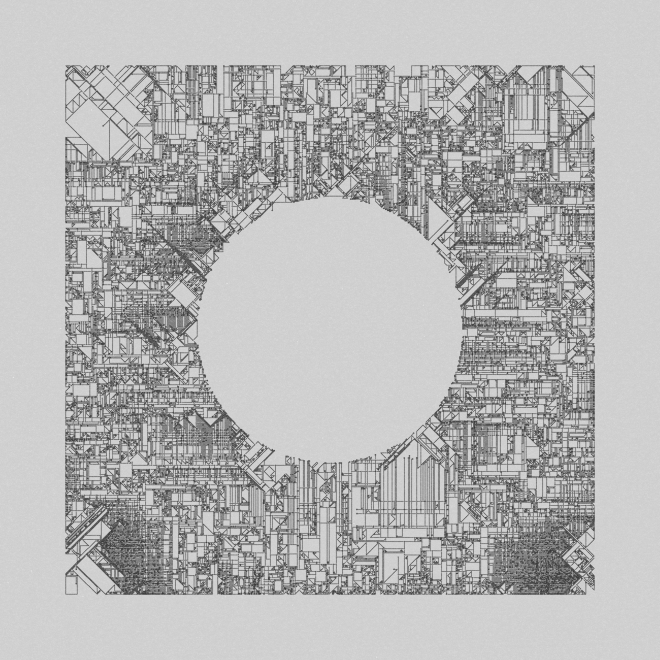
I found a little time to do some more generative art experiments in the last six months or so. This one started as a desire to make a laptop wallpaper for myself and is pretty self-explanatory and also not quite done yet – I wanted to make something that lived between retro techy vector art and a PCB or city layout. I think it still needs more variety in design elements, a more robust random color generator and a better way of creating negative space (currently hard-coded) but it’s getting there. I did setup everything resolution-independent so it’s easy to scale.
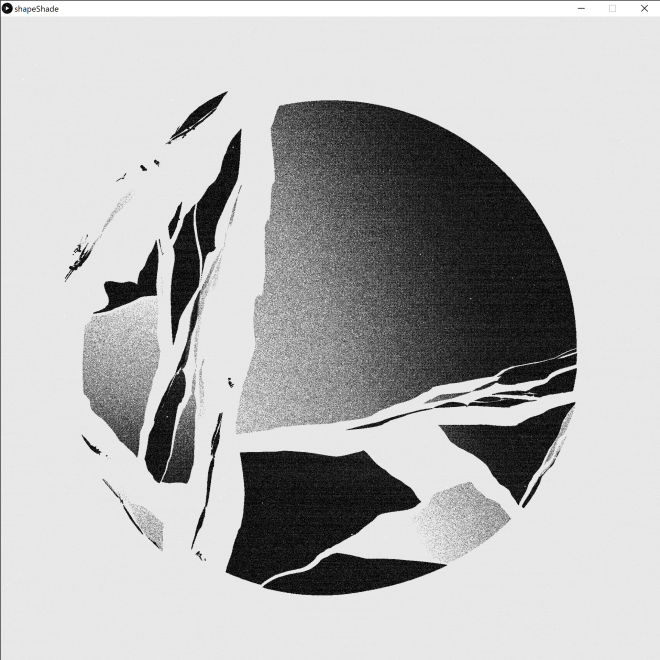
Another Processing experiment that’s all about multiple levels of distortion and transformation – the basis of it is randomly placed concentric fading rings drawn with additive sub-pixel size rectangles, but with layers upon layers of modulation. In addition I wanted to add some more hard geometric shapes to contrast with the organic softness of the simplex noise, so some areas get modulated with a sort of random brick-style grid, the edges of which get blurred, brightened and spread for emphasis.
The end result feels kind of alien to me. I like the noisiness of drawing with lots of tiny rectangles but at the same time it’s atrociously slow to render. Some day maybe I’ll look into optimization but my lack of interest in that aspect is I think indicative of the fact that I’m much more artist than programmer.
While I haven’t posted any new music lately, I do have a new album nearing completion. In many ways I feel it’s kind of a counterpoint to my previous 2024 album Interlinked. While I feel the latter expressed a clear sense of love, openness, hope, peace and contentment, this one has a bit darker tone overall. There are still a few quiet moments but I generally felt more like expressing a sense of challenge, defiance, and disenchantment through faster tempos, distortion, more harmonic minors and diminished chords.
Much of it is an ongoing reaction to my perception of the zeitgeist; the way that this digital space I once considered a refuge from the banality of the real world has slowly deteriorated into a space to amplify the worst qualities of it, then reify those amplifications into feedback loops that tear at the fabric of our society and democracy.
It’s possible that this bleak decay of what I once valued so highly has also contributed to my lack of updates here. My purposeful self-exile from social media may be yet another factor – I don’t feel much of a sense of community to contribute to. Even something as specific as SoundCloud feels very commercialized, like everyone is trying to hustle and clamber up to some sort of monetary, or at least numeric, success.
Which tangentially leads me to the inevitable topic of generative AI. Early on I felt an uneasy neutrality toward it, having always been excited by the application of technology to creative art but dissuaded by the almost frictionless potentials for abuse.
But over the past couple of years it’s become quite clear to me just how negative of an effect it has in the hands of megacorporations. While it’s still far from a state where I feel my livelihood as a creative professional is threatened, it already has a subtle but clear effect of further devaluing the skilled work of artists of all types.
I’m still holding out hope that the public sentiment toward AI generated content remains negative. From what I’ve seen people really do value human effort, real stories, genuine emotion, feelings and thoughts – the things that make art and culture worthwhile and not something to be automated. Even my kids have had visceral negative reactions to AI-generated content without even knowing – “Ugh, why does it look so weird?”
I think there’s still potential for creative use of it somewhere – not just in the broad application of Machine Learning, which is full of creative potential (at the very least for tooling), but in a postmodern, self-aware way – someone will do something legitimately creative with it. But I think that will be a niche exception rather than the disrupting/revolutionizing technology that is trying to be sold to us.
On an annoying tangential note – some AI slop songs, probably Suno generated, started showing up on my even-less-frequently-updated YouTube page, under my artist name. YouTube doesn’t make it easy to take them down – they’re still all “Under Review”. And then some time within the last couple weeks another batch showed up, with even more banal titles like “Unicorns and U-Turns” and “6-7”. If I didn’t know any better I would think someone was trying to fuck with me directly, but I think the more likely answer is that it’s just dead internet creep expanding into my little corner. I contacted DistroKid directly as they’re responsible for distributing the slop but they were no help whatsoever. On one hand it feels a little discouraging, but on the other it’s fuel for me to keep fighting with real creative output.
I guess that’s it for now, I feel like I’m running out of writing steam and my eyes are getting blurry. Whenever I have free time and a choice between doing something creative or updating this blog I’ve chosen the former because I think my content speaks better than my words, but perhaps I’ve balanced that too far to one side. Feels good to get an update here now, and there should be another soon when I get this album wrapped up.
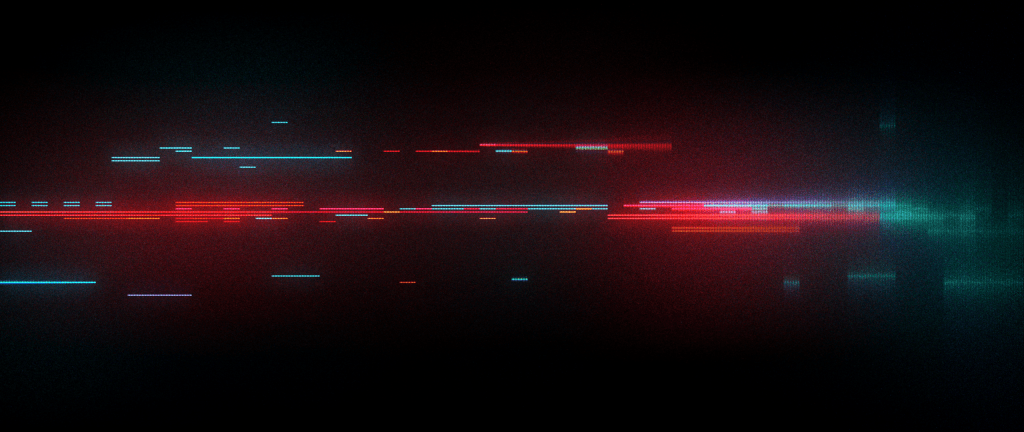
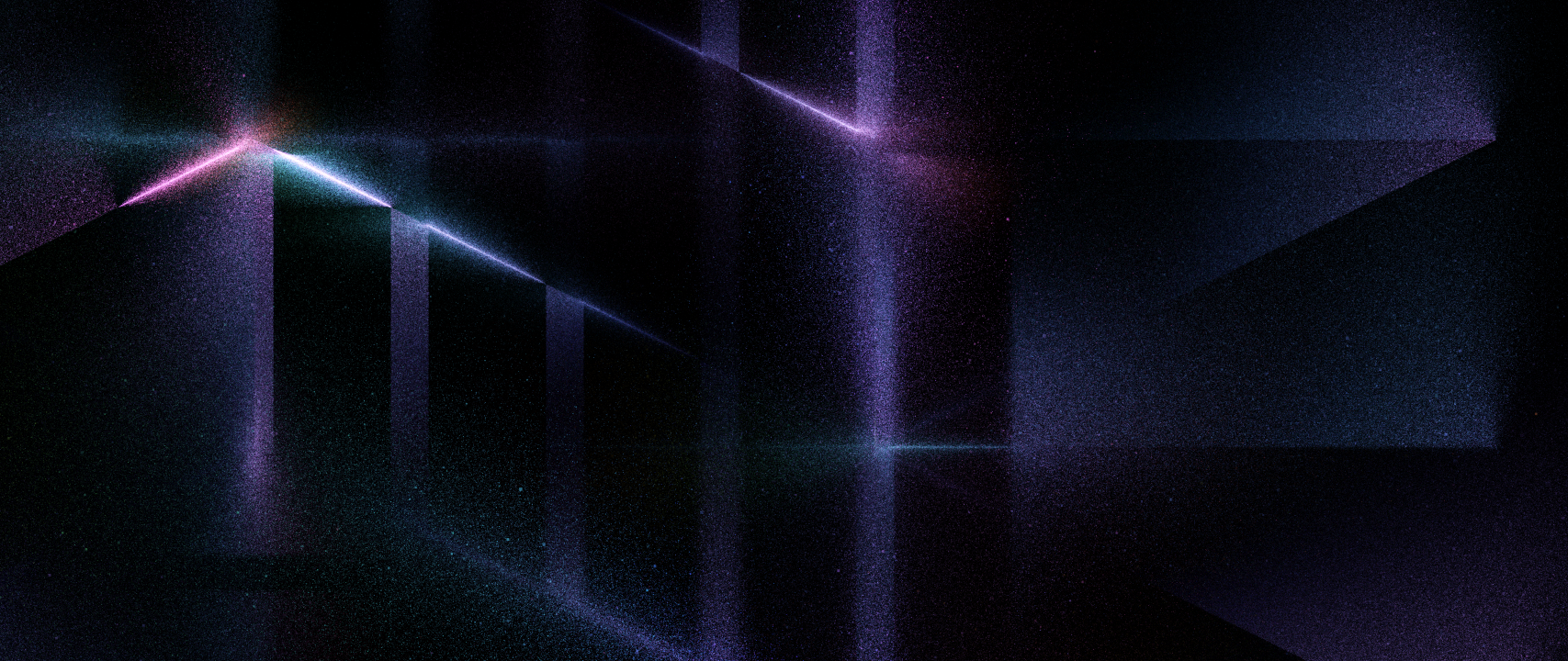
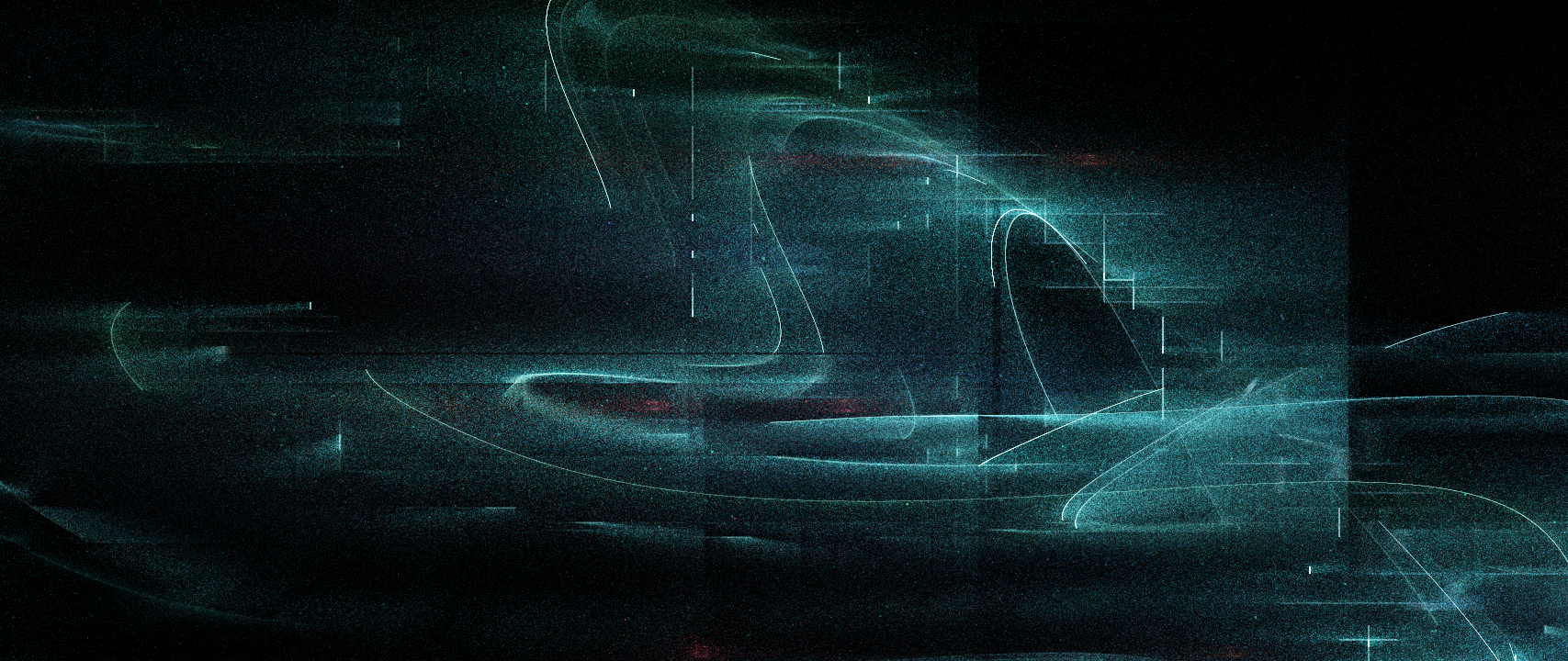
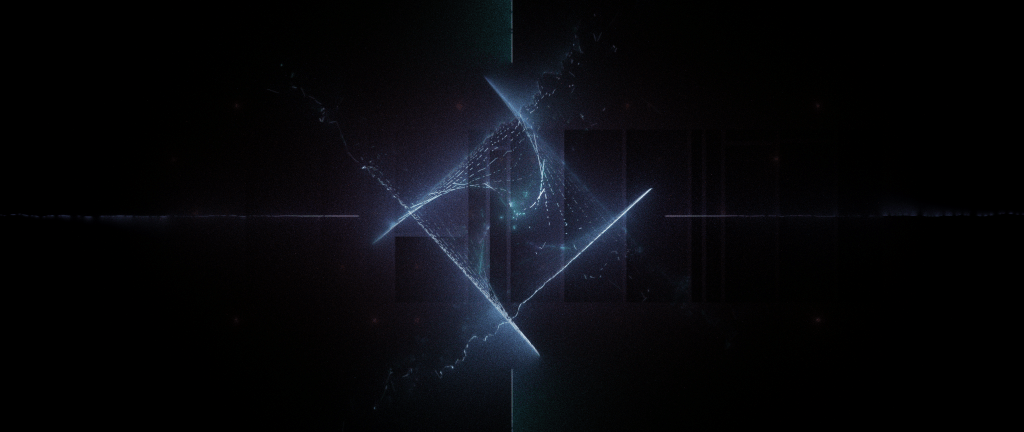
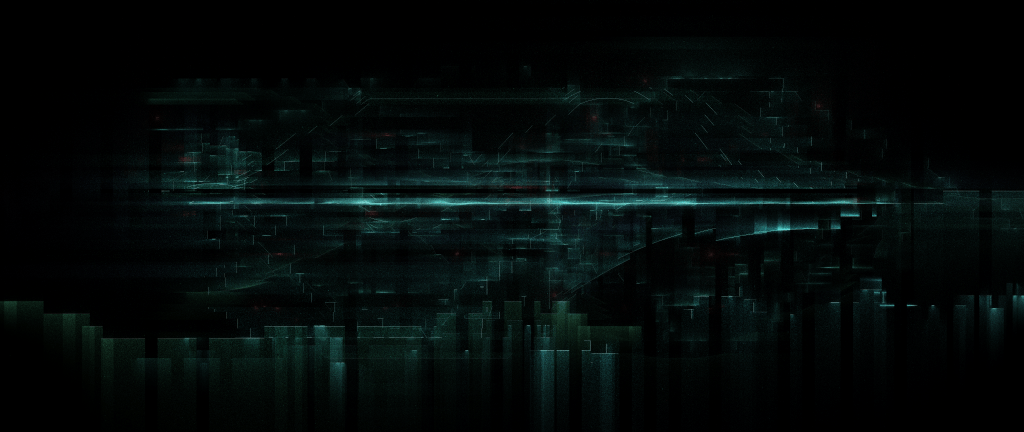
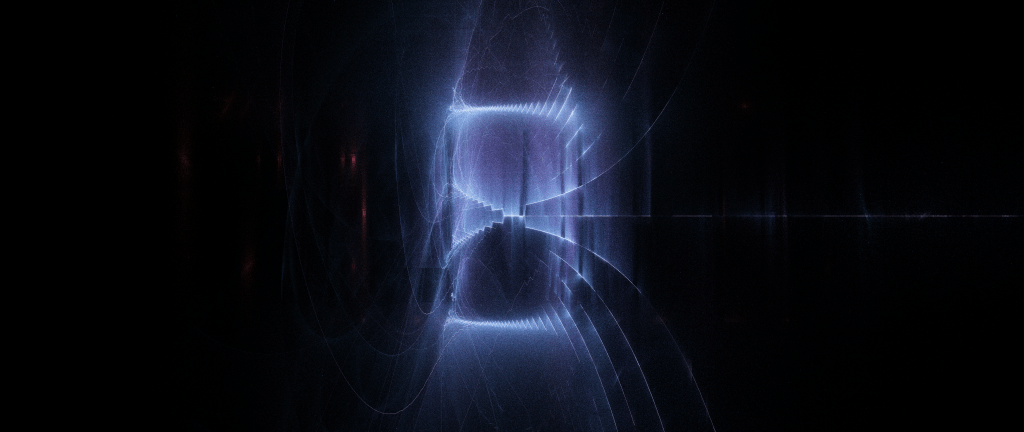
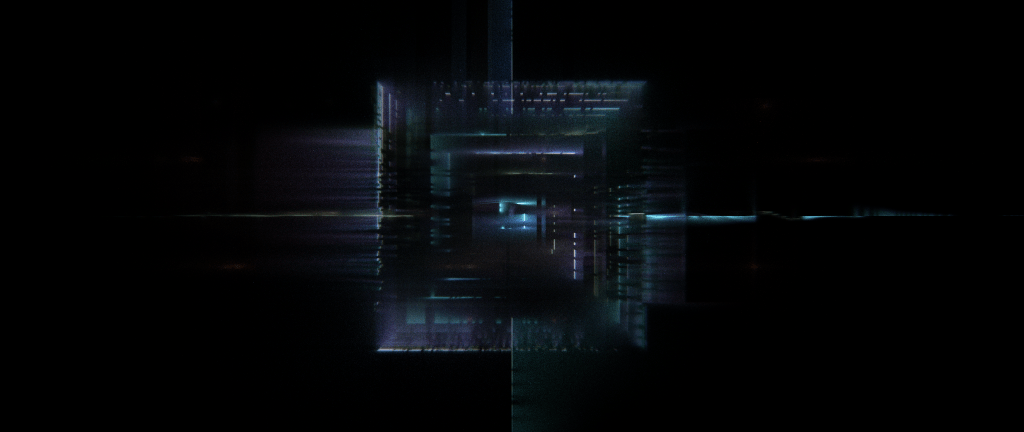
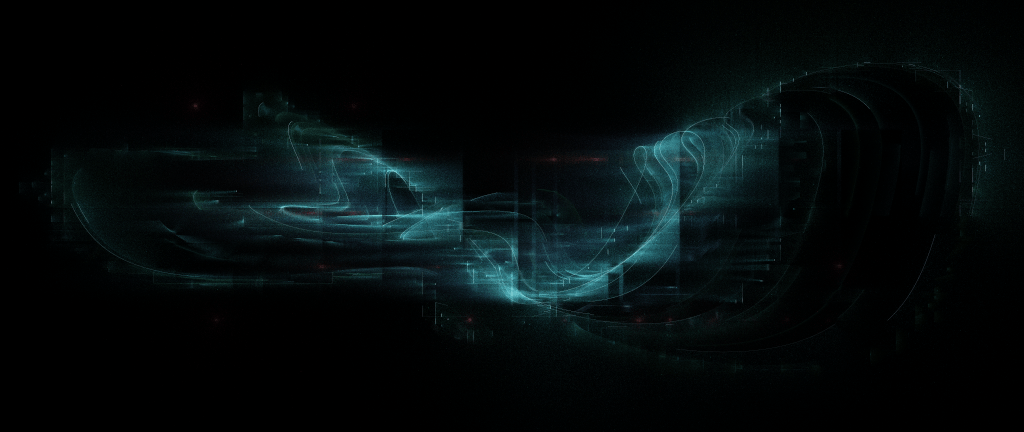
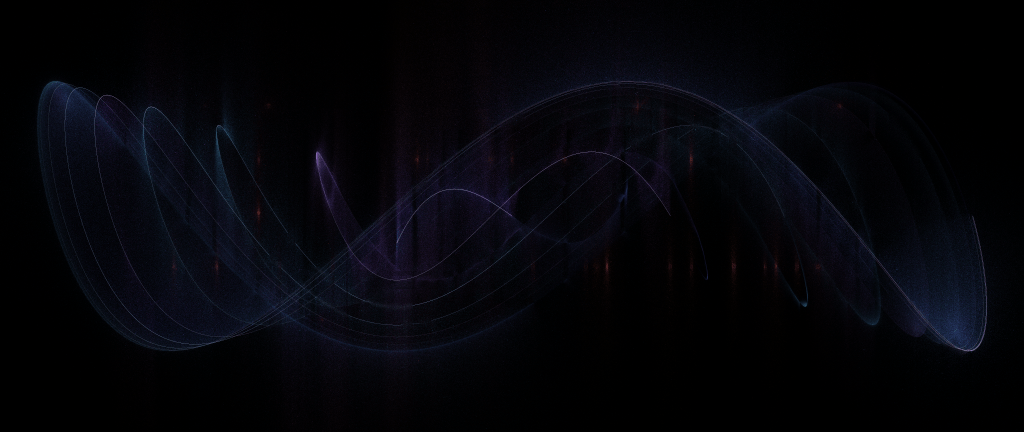
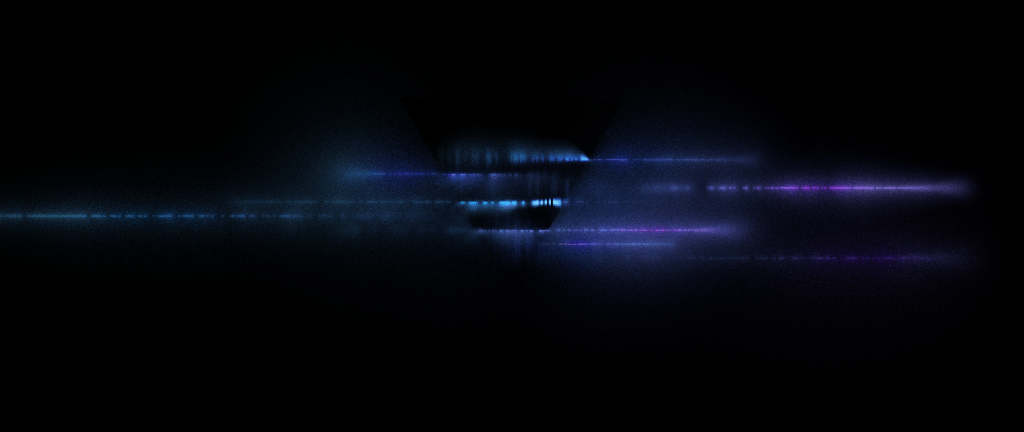
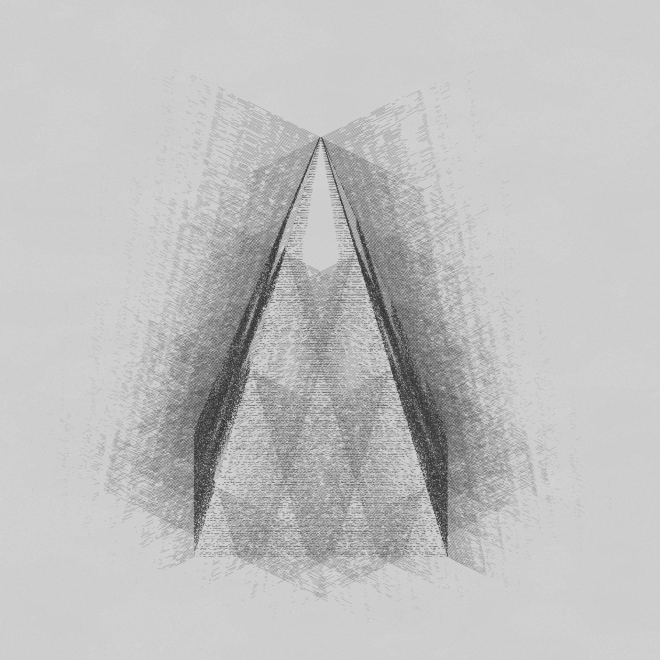
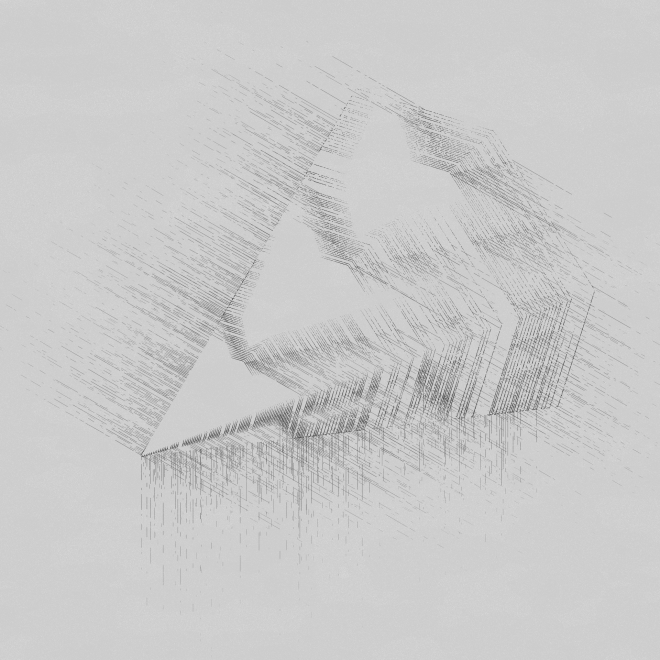
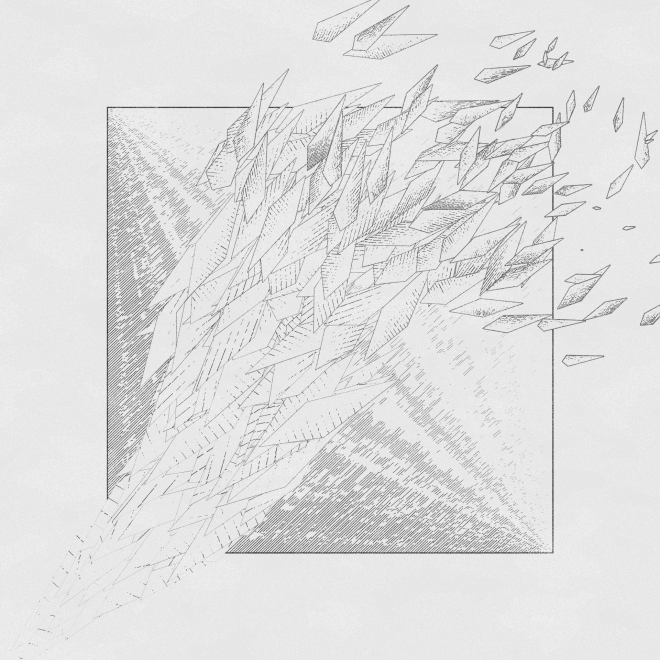
A series of generative art experiments I’ve been iterating on over the last few weeks. These are all direct outputs from Processing, rendered at ultrawide/21:9 5120×2160. Initially I was working on some supplemental imagery to support my album release and refresh some of my music site profiles, but I ended up having a lot of fun playing with these algorithms and developing them further. They’re quite dark overall as I tend to work on them at night in fullscreen mode and don’t like blowing out my eyeballs with bright values when rendering; also the subtlety of darker tones works better as backdrops for light text on various profiles.
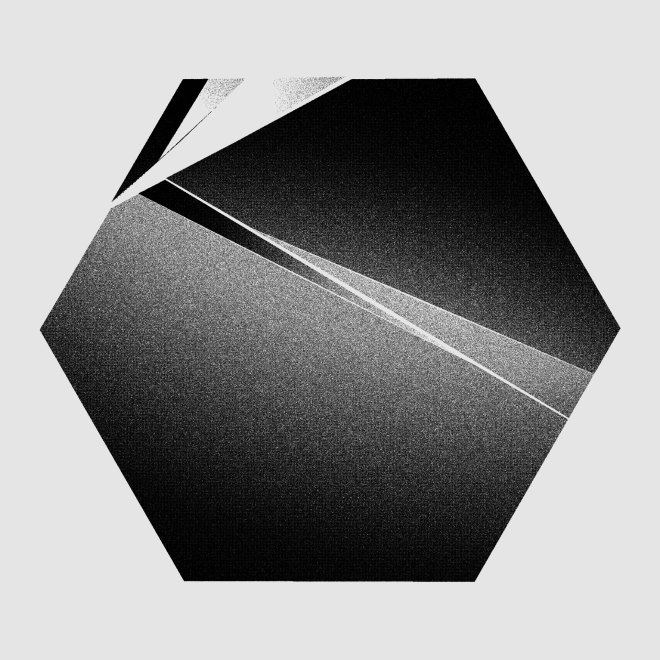
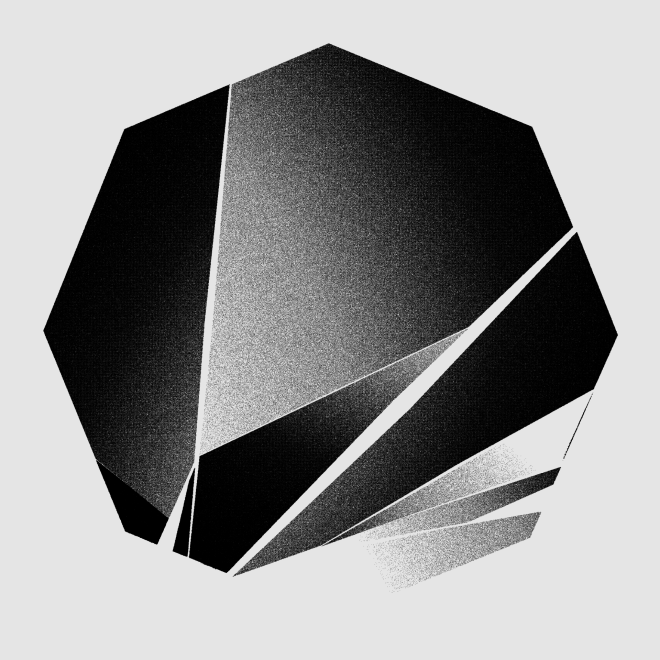
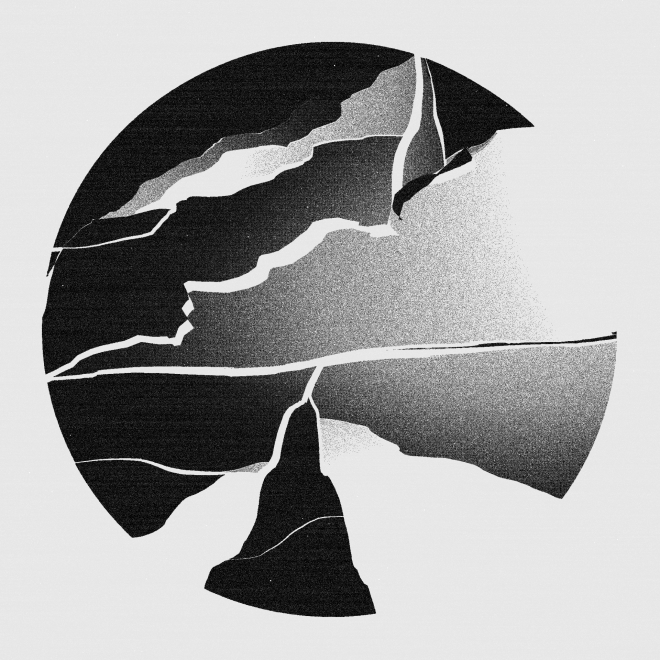
These are all based on a system of line segments that randomly emit tiny dots from their “normal” (which is just offset 90 degrees from the angle between their vertices). The brightness is based on the inverse square distance to a center point in the series of segments, which isn’t necessarily contiguous. Helpful to maintain the illusion if it is, but also fun to break the rule for more glitchy effects as I experimented with later on. Anyway that “brightness” value is also used to drive other parameters like hue shift, angle spread, and distance from the segment.
I was happy with this effect but also wanted to create the illusion of some areas being blurred, out of focus, or in shadow, so I also created a series of “invisible” polygons. When a dot’s position ends up within one of these polygons, some of the properties change, mainly angle, value and distance from the segment, but I experimented with many other effects in this area like hue shifts, applying perlin noise to the angle and distance, or gaussian blurring.
From here I wanted to break out of the initial grid and started experimenting with other shapes. My rough guiding principle was the idea of finding beauty at the intersection of order and chaos, so to that end I tried to include some mixture of controlled shapes and randomness, hard edges and curves, grids and noise.
Also experimented with adding a little chromatic aberration to the rendering based on distance to the center of the screen.
A vague question that kept arising for me here was where to make the division between planned composition and randomness. In my previous generative efforts I felt a stronger compulsion to aim for randomness, but pure randomness doesn’t make for great compositions without a ton of work. And even then, doesn’t that large amount of work ultimately amount to just a wider variety of planned compositions in a different way? So this time around I tried to feel less “constrained” by the idea of requiring the overall composition to result from randomness in generative techniques and just go with what I felt would look cool.
I also tried to embrace happy accidents as much as possible – for example here I did not intend for a central symmetry, but it came out that way because I’m working with (0, 0) at the center of the screen and forgot to offset the Perlin noise (which in Processing is symmetrical at the origin) to account for that.
I recently learned about OKlab color space and tried out using this implementation for these experiments. I think it does indeed provide some very nice color transitions compared to the default HSV.
Gallery of full resolution images (please zoom in for full effect!):
What started as an idea for a single or EP here ended up as a 10-track album; I suppose ultimately it felt like there was quite a bit that I wanted to express, and when inspiration is flowing I try to capture as much as I can before it inevitably dries up. The impetuses behind this release are too personal to detail in a public space such as this, but broadly it’s about love, trust, hope, connection, openness, interdependence, and acceptance, all underpinned with a futurist motif as usual.
The motivations behind my previous two albums, Metamorph and Internal Reflection, were more about introspection, breaking out of the mold, and attempting to improve upon the technical aspects of production. In contrast, this time I ended up prioritizing intuition and feeling over critical thought as guiding principles. As such I think it ended up closer to my previous work in some ways, but still also incorporating some of the vocabulary I picked up over the last few years in attempts to expand my palette and keep things fresh and interesting. Often I found myself satisfied with relatively simpler beats and slower tempos, or emphasizing a lead melody over unique sound design. Not that those elements aren’t still present, but overall I tried to incorporate them in more of a supportive or secondary role than a primary focus.
About half of these tracks started off as sketches on Elektron hardware (the Digitakt/Syntakt/Digitone combo I posted last year), and really is the first time I’ve brought such sketches to a polished, complete finish in such a workflow. I found the transition from hardware to software presented some new challenges but also new possibilities, and I ended up trying to exploit the latter as much as possible – for example, treating the FX send track as an entirely separate element, sometimes even highlighting it in solo without its contributing sources.
The process of sequencing, designing and mixing these tracks was both therapeutic and rewarding to me. Broadly speaking I wrote this as much from the heart as the mind and I hope that sense is, at least to some degree, conveyed through the album itself.
I’m planning to push the Bandcamp release in a few days on 1/23, followed by Soundcloud, Spotify and the plethora of other streaming services the following Tuesday 1/30. I always seem to forget how much peripheral effort is needed to wrap up a release and push it live; sometimes I miss the old days where all I had to do was zip up a handful of .xm files and ftp them to scene.org, or hand edit an html file and link a 192kbps mp3 on my ISP-hosted website. But I suppose that is the price of convenience and relevance in 2024!
A few months ago my old friend Astrotek offered me a chance to remix his newest track “Solar Orbit,” free from restriction to genre or even time frame to release. His Original Mix is decidedly psytrance, crafted in his meticulously layered and carefully balanced style, with a flair for space exploration motifs. Internally I was a little hesitant to accept at first – trance is a genre well outside my wheelhouse after all – but I wanted to take it on both as a personal challenge and as an opportunity to honor an old friendship that was forged through music.
Astrotek and I go way back to tracking days, trading 3.5″ floppies with S3Ms, questionably legal software (and often data errors) at school. We both looked up to the demoscene savants of the time, while also drawing inspiration from VGM, techno, jungle, drum&bass, and eventually the wider gamut of electronic music becoming available in the early Napster era. So our early years in production paralleled each other closely, but our paths in life diverged as we entered adulthood.
Still, every once in awhile he would reach out and we’d catch up, talk about music and life, maybe even do a remix once in awhile. I’ve never been great at being the friend who stays in touch so I think part of my motivation to do this project was also an expression of appreciation for that. I’ve also written previously about my reverence for the recognition of one’s origins in creative pursuits, and in a way collaborating on a project like this touched closely on that vein.
As to the remix itself – initially my instinct was to try a drum&bass flavored take on it, but my attempts felt stale and lacking a spark of inspiration. After some weeks I scrapped my first attempts and tried a shuffled, vaguely 2-step/uk garage-ish approach. To me that captured more of the fun, lighthearted EDM spirit of the original with a sufficiently open canvas to play with sound design, glitches, drum fills and other details. In the end I had a lot of fun working on it, breaking free from some of my usual conventions and trappings, and I hope that enjoyment is conveyed through the track itself.
Earlier this year my friend LayerZero, who runs local monthly IDM listening sessions through Bay Area Braindance, invited me to play a live set at a party he was hosting for us fellow electronic music enthusiasts. My perfectionist nature had me hesitant at first, but eventually I entertained the idea and started browsing sketches on my Digitakt to see if anything would work as a suitable starting point.
Initially I was thinking of putting together a relatively short set – maybe 20 minutes or so – but had so much fun exploring the possibilities of live performance on the Elektron boxes that it ended up closer to 50 minutes. I also found the process to be an effective way of bringing together half-baked tracks or ideas that I felt had potential but was struggling with arrangement on. The need to have each track flow together combined with the limitations of a dawless setup and a fixed performance date provided just enough constraints to keep myself moving forward with it at a steady pace.
My initial anxieties about performing live (what if I screw up noticeably? what if they think it’s lame, or even worse, boring?) had me concerned that more controls would mean more potential for error and confusion in a realtime setting, so I thought I’d just stick to the Digitakt for maximum flexibility in sound palette. But my starting track – the first sketch I thought would be suitable for a generally braindance-themed party – was an experiment in loading all 72 factory single-cycle waveforms and randomizing them per step, leaving me with just 56 sample slots for the remainder of my set. So eventually I brought in the Syntakt for more variation, figuring that for each track I’d favor one or the other as the primary sound source. But by the time I got to the end I found myself utilizing both of them fully, sacrificing precise memorization of which sound was on which track for more sonic variation.
Additionally, I thought it would be nice to incorporate my Korg minilogue here and there as way to break out some longer lead sequences from the limitations of the Digitakt and Syntakt’s 64-step patterns. In practice though I found it difficult to work patches into the “sweet spot,” and had some other technical issues with midi program changes. That was enough motivation for me to spring for an Arturia Minifreak, which became an essential part of the set and has thus far proven very enjoyable both to play with and program patches for.
Despite the number of times I practiced the whole thing, including a couple of dry runs, there were some unanticipated hiccups on the day of. We had some gain/clipping issues at the beginning so the first track loops much longer than intended while we sorted that out. I also didn’t account for people hanging around and talking in the room where I was performing, which was lovely for the party vibe but also resulted in me tweaking volume levels I’d carefully balanced before in order to even hear the changes and tweaks I’d planned as part of the set. And while I wasn’t too nervous at the time, I still think it wasn’t my best take overall. I’ve been mulling over the idea of doing a “studio” recording of it with all of the inputs separated and doing a proper mix with additional risers, impacts and effects, but that’s also a lot of work for something that’s essentially already there, and perhaps would detract from the spirit of a live set, mistakes and all.
So for now I’m just considering this a prototype for a new method of producing; as I mentioned the limitations were just enough to keep me motivated and moving forward at a steady pace, circumventing so many of the mental blocks that I seem to unavoidably blockade my creative process with time and time again. I think it could work well as basis for some initial constraints and framework which I’d follow up with recording everything into Live for the additional polish I generally aim for.
Also, as much fun as I had with it, I do think it also lacks cohesion, jumping sort of randomly between IDM, techno, breaks and drum&bass. Despite most of my albums being similarly stylistically diverse, I’d like for my next attempt to start with a broader idea, motif or overall arc and stick with it.
Visuals
Beyond hosting the party and contributing a mind-melting DJ set of his own, LayerZero brought the experience to the next level setting up projectors with live, interactive, synced visuals via Resolume, (not to mention recording the whole thing on multiple cameras and putting together the final video!) When I was pretty much done writing the set, we collaborated on layering some VJ loops from his library to accompany each section of it, which he tweaked in realtime while I played.
At some point I was struck by this project’s similarity to my inspirational roots, the PC demoscene, and was inspired to created some visual loops of my own that would sync tightly to elements of my set. These were all of course animated in After Effects and not generated algorithmically like a proper demo. Nevertheless an audiovisual project like this has long been a goal of mine and I’m grateful to have an encouraging friend provide me not only with motivation and encouragement but the technical means to glue it all together and make it happen.
I’m going to take a moment here to lament the fact that in 2023 there’s no straightforward way to put a series of 60fps video loops on WordPress, though I’m sure if it helped sell crap from Alibaba it’d be integrated into the next Chromium nightly build. But I digress. Here’s a series of clips in 30fps dithered GIF using decades old compression technology.
Some of these are simpler than others as they’re intended to be layered with the existing library loops that we’d selected. Overall I really enjoyed coming up with fairly abstract ideas to visualize aspects of the music I created, and if you watch the YouTube video you’ll probably see where he mixed them in. Ideally (maybe next time?) they’d be 100% original loops, but that is indeed an intimidating chunk of work.
On the fourth clip from the top, I’d be remiss not to mention that I generated those cyberpunk-headphone-girl faces using Stable Diffusion. While I certainly wouldn’t consider myself a proponent of “AI art,” I do find myself conflicted about this controversial topic. On one hand, as professional artist, the ability to effortlessly create beautiful pictures just by typing out what one wants is unnerving, especially in the hands of our consistently inhumane corporate overlords. On the other, the application of technology to art has been an inspiration for my career and something I’ve always enjoyed exploring. So in this middle position I’ve been contemplating how and if I might ever utilize this unprecedented and powerful new technology in a way that seems ethically sound. This particular application seemed fine to me – small audience, non-commercial, a supporting piece of the whole and not the end result itself, and not something I could reasonably create on my own without committing significant portions of time and money.
Anyway, all-in-all I’d say this project ended up fulfilling some creative goals I’ve had for many years, and even though it didn’t come out perfectly it was full of invaluable learning experiences. And once again I want to express gratitude to LayerZero for providing the means, venue, impetus and encouragement to explore some new creative territory.
Doing something a little different here and posting some realtime patterns I’ve been playing with, mainly centered around the Elektron Syntakt but also supported by the Digitakt/Digitone and a bit of the Analog 4. These are fairly rough and unfinished, and most of them will likely stay that way. There’s quite a bit of text and explanation of the whole thing and thoughts about each pattern in the video, so I won’t reiterate all of that here. But I thought it’d be a fun change of pace to share some explorations of in-progress stuff and do a synth fingers video.
I’d hoped to write up a post for this album on its actual release date of 6/7, but as fate would have it, Sporkii and I were vacationing in Scotland and contracted COVID a couple of days before our scheduled return flight. At the time, the CDC requirement to return to the US was either a negative test, or positive test with 10 days quarantine and doctor’s note of recovery. Fortunately we’ve both had our vaccines and boosters, so the illness itself wasn’t the worst of our problems. Anyway, I won’t go into any further detail regarding the challenges of contracting COVID abroad, but suffice to say I had to postpone blog entries and self promotion due to more pressing matters.
Anyway, now that I’m home and my ducks are all back in their respective rows, I’m happy to belatedly announce the release of Internal Reflection, the result of another couple of years of exploration, experimentation, self-expression, excessive self-criticism and efforts to overcome it. As I’ve written previously, one of my broadest metrics for self-evaluation has been my own enjoyment, i.e., I try to make stuff that I would be happy to listen to if I’d stumbled across it myself. I’ve often equated this with honesty or sincerity, but as I think about it it’s really an attempt at being honest with myself. As such, I think the end results reflect a wide gamut of mental states, and correspondingly there are sometimes large gaps in tone and energy between tracks.
Along those lines, while creating and evaluating the album I found the end result of a song might seem boring and homogenous on one day but perfectly relaxing or contemplative as intended on another. In my preview post last month I mentioned my forays into meditation, for example. I don’t feel like an equanimous, truly neutral and universally accepting state of mind could be accurately (or honestly) expressed by 180 bpm fractal breakbeat chops or sweeping emotive chord sequences. Indeed I found more success expressing this state of consciousness utilizing generative sequencing techniques – letting the computer decide the melody (to some constrained degree) while I worked my sound design and improvisation around that basis.
On the other hand, high-energy standouts like “Crystallovore” and “Disinformation Filter” arose, perhaps obviously, out of frustration and exhaustion with the sociopolitical climate, the seemingly inescapable tribalist animosity and shameless manipulation across social media as we approached the end of the previous election cycle. And while the circumstances of my life aren’t presenting me with as many frustrations in recent days, I still wanted to include these expressions as a record of the time, so that the album in its entirety forms something of an abstract journaling of my emotional and mental states over the last couple years.
I thought about going through each individual track and explaining my thoughts and inspirations behind each, but ultimately decided against it. Looking back on my history of listening to other artists’ work, I’ve generally preferred coming to my own opinions and interpretations of songs over having the meaning spelled out for me.
Anyway, now that this is out in the world, I’ve been considering what to work on next. Maybe physical plotter art, or more abstract 3D stuff with Tyflow, or perhaps taking an intentionally constrained workflow with music – limiting myself to one or two hardware synths at a time. These all sound promising to me, but to be honest I’ve been spending the bulk of my free time playing Dyson Sphere Program. Just can’t seem to get enough automation gaming lately.
It’s been a while since my last post! I’ve been busy with music and second-guessing myself (more on that later,) but I’m happy to announce the upcoming release of a new album, “Internal Reflection.”
In some ways I feel like it’s an iteration or refinement of many of the themes I began on “Metamorph,” trying to keep things fresh, unique and loose by intentionally choosing different techniques in the ideation process. Overall, it’s been an effective method for me. But I also found it leads to new decisions about where to draw the line in letting the natural strengths of the tools guide the music itself; at what point does my voice get lost in the endeavor to keep things creatively fresh? When it comes to creativity, I’m generally of the opinion that the artist should guide the tools, not the other way around. So in that regard I did try to find a balance, and I hope it comes across for my long-time listeners.
Despite my confidence in technique, I ran into a lot of hesitation and second-guessing myself with this album. Listening to tracks over and over, looking for improvements to make or trying with futility to reevaluate them with an objective ear, which ultimately only serves to entrench them further into my mind as immutable blocks.
For some time, I considered releasing two separate albums to deal with the disparity between the frustration-fueled high energy noise of tracks like “Crystallovore” and “Disinformation Filter,” and the calmer, equanimous tracks like “Decoherence” or “Chromatic Dispersion,” inspired both by the geometric and physical interactions of light and my explorations in mindfulness meditation. In between those extremes are tracks like “Five Constellations” or “Faceted Multidimensional,” which I feel ride the line between the two and are clear candidates for inclusion, but perhaps not enough on their own, or would come off as tiresome and homogenous with a similar energy level for an hour+ listening experience.
When I finished “Metamorph” I had a loose goal of forming a tighter sound for my next release – something more conceptual and unified, centered around a predefined theme. While “Internal Reflection” eventually coalesced into something vaguely representing that, it still feels more like a collage of thoughts, ideas, dreams and emotions I’ve made attempts to express musically over the last couple of years. While in a sense my personal metric for evaluating my own work is centered upon my enjoyment of it, I sincerely hope there are aspects that are effectively communicated through such an ephemeral medium and resonate with you as well.
“Internal Reflection” will release on Bandcamp, Spotify, Soundcloud and other streaming services on 6/7/22.
In the meantime, I’ll also share some other iterations of the album art I put together before arriving at the final. These were created using 3ds max, Arnold Render, TyFlow, Photoshop and Processing. I tried to find a balance between busy detailed chaos and negative space, emphasizing colorful reflections in synthetic structures, while also being mindful of the overall composition and the fact that most listeners will only see it as a tiny, compressed thumbnail.
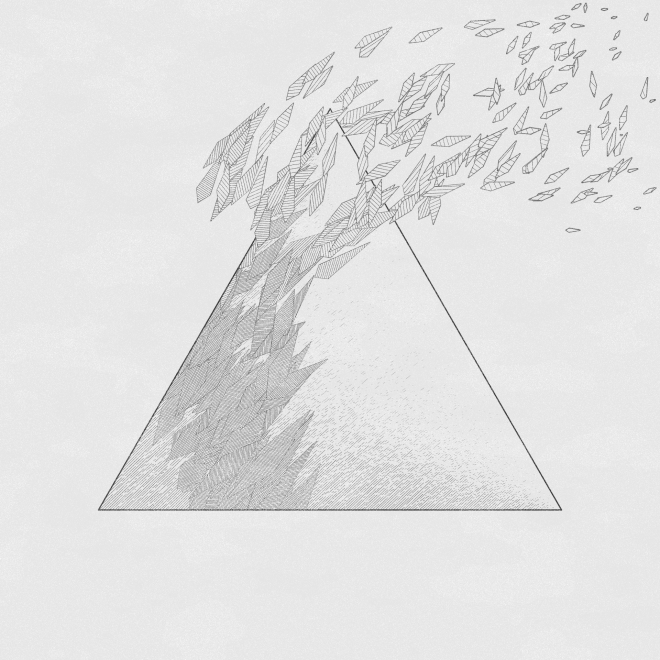
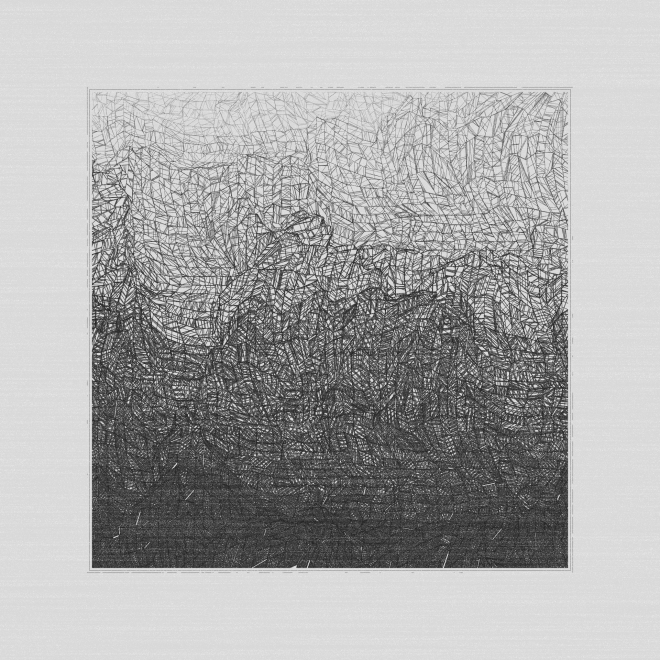
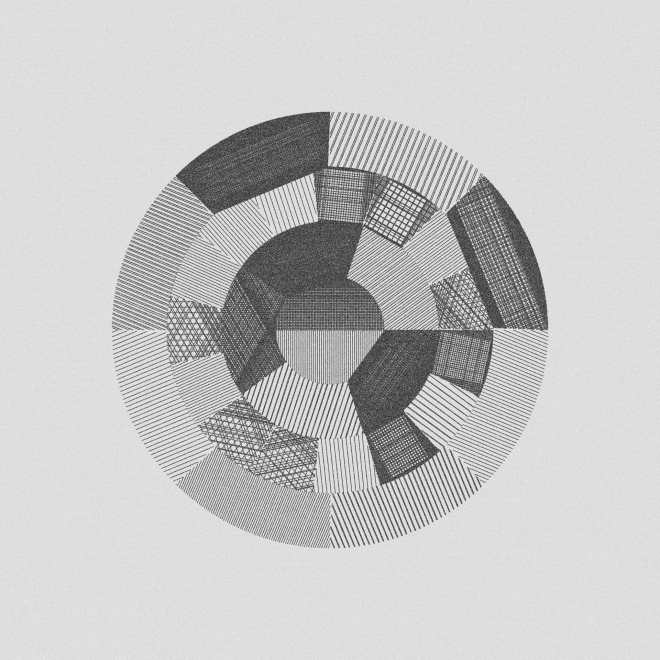
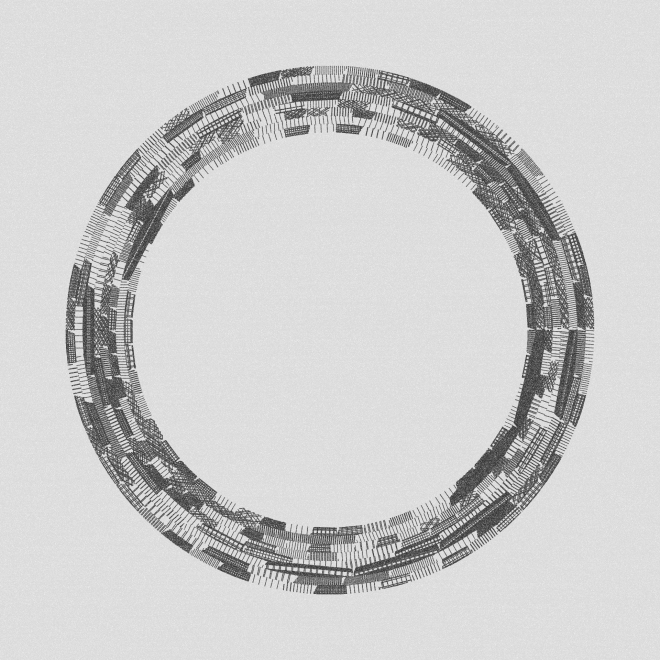
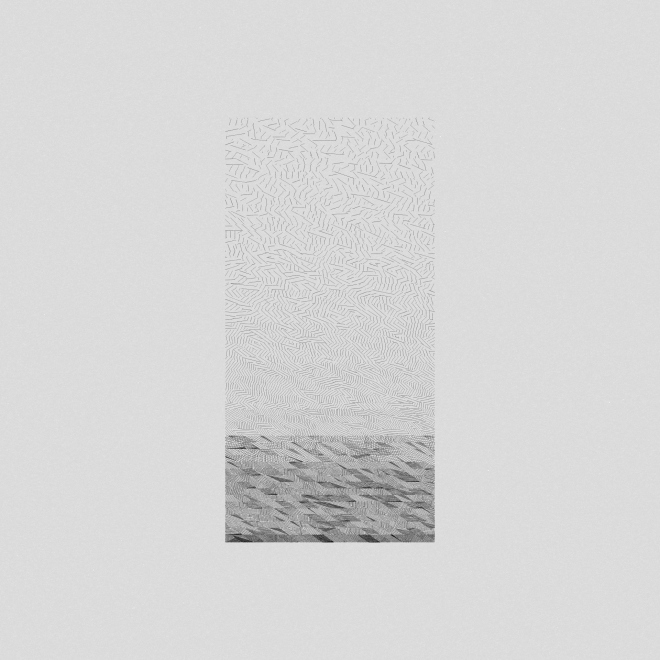
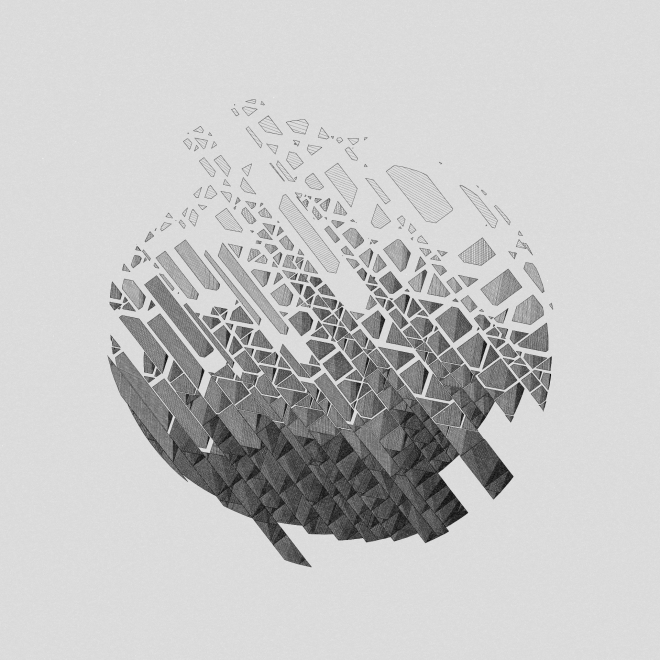
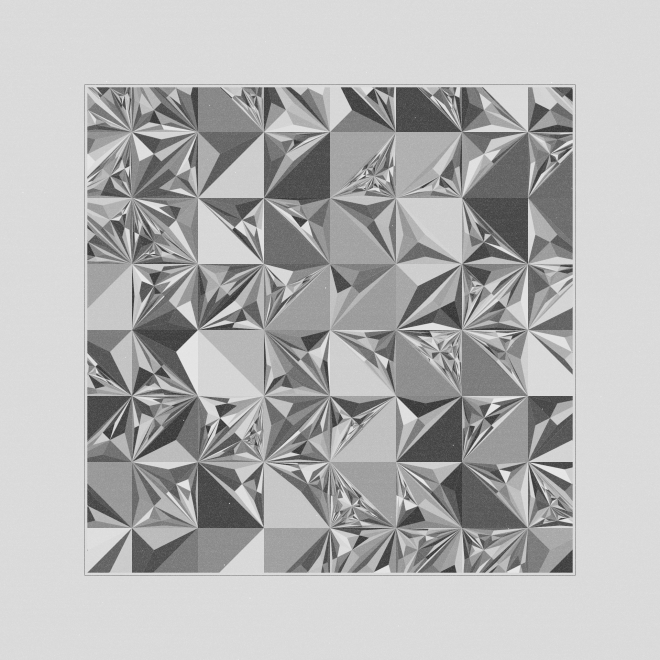
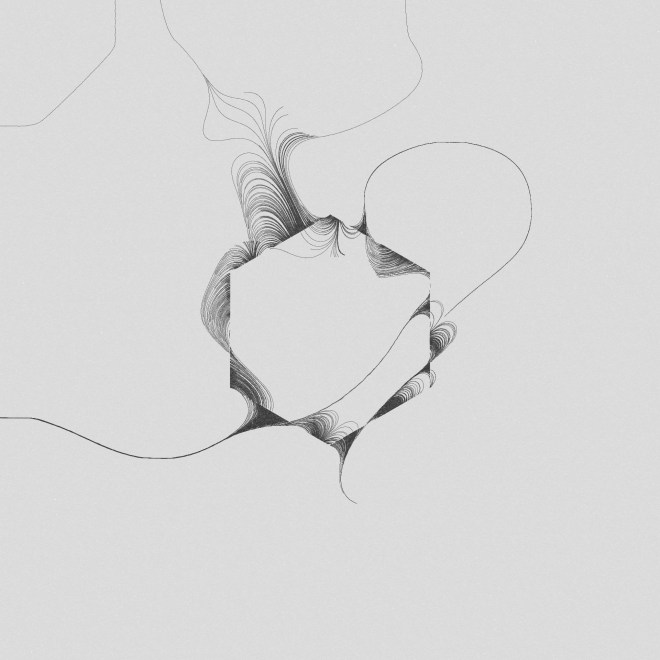
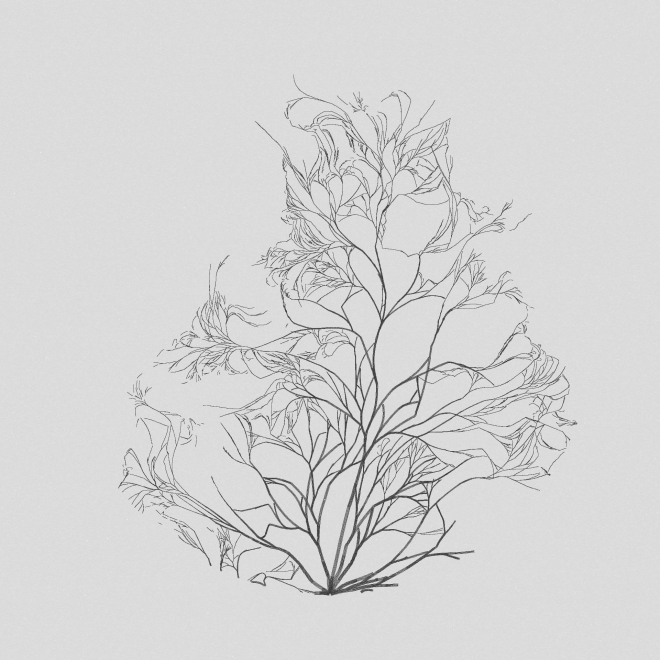
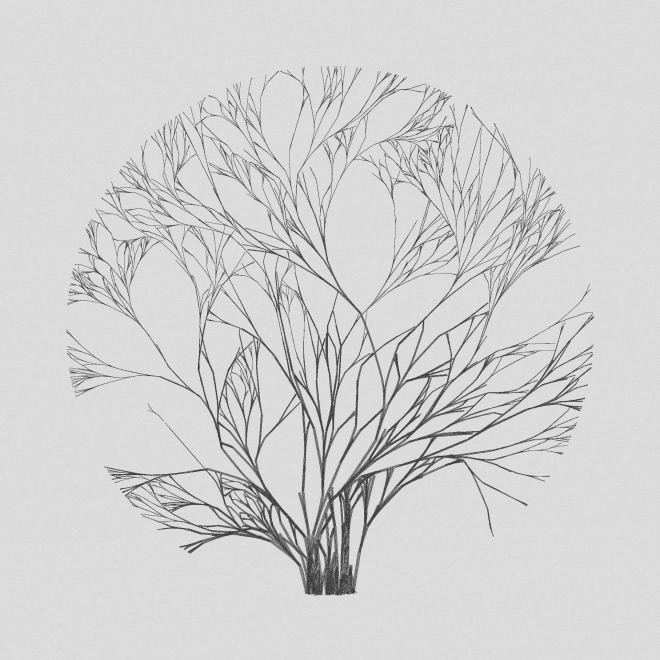
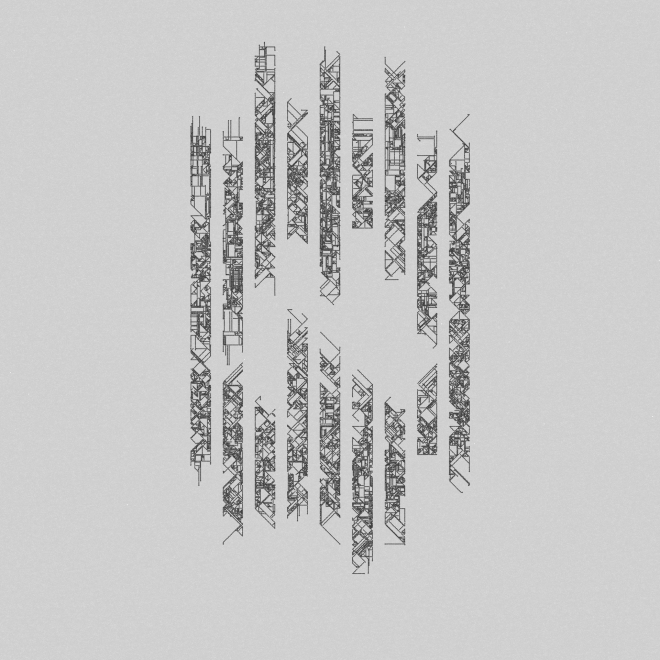
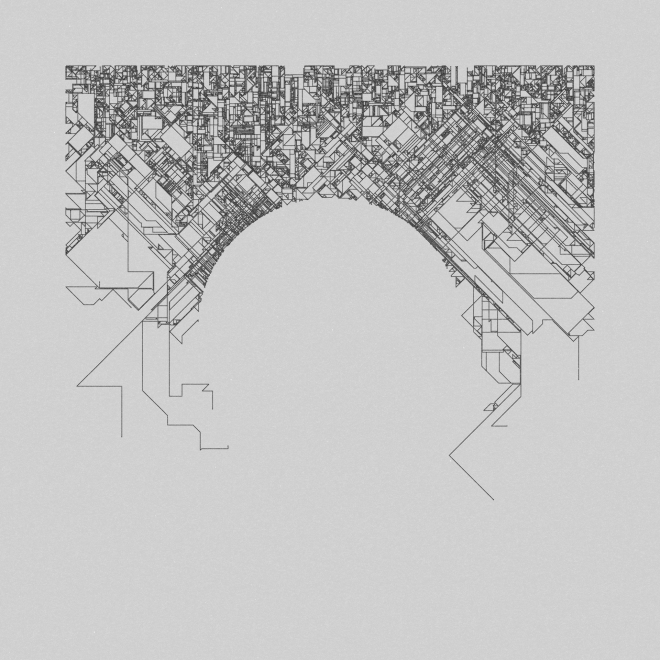
Sometime late last spring I got completely hooked on Factorio and ended up pouring some hundreds of hours into it across several playthroughs. After launching my first rocket (i.e., beating the game,) I found myself left with a lingering desire to create complex systems that work harmoniously with one another. I ended up channeling that desire into getting reacquainted with Processing and diving back into generative art for the first time since a certain controversial entrepreneur single-handedly marked the death knell for Flash on the web.
As I continued experimenting I found a manifesto for this series loosely forming in my subconscious mind, and ultimately crystallized those thoughts into a series of guidelines:
Harness the power of the medium to automate that which would be tedious to create by hand or using traditional techniques
Celebrate the beauty of geometry
Strike a balance between sterile accuracy and natural chaos
Strike a balance between pleasant minimalism and fractal complexity
Take inspiration from nature
Playfully balance composition and repetition
Avoid simply recreating well-established looks and techniques typical of the medium
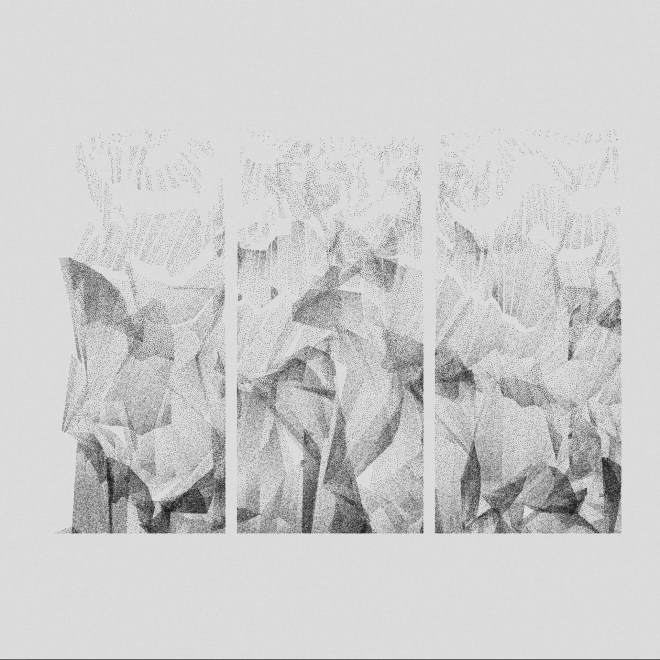
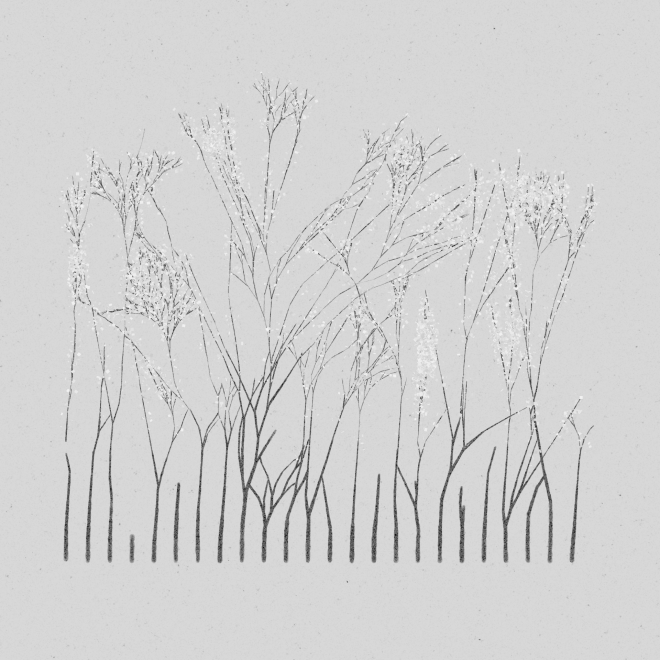
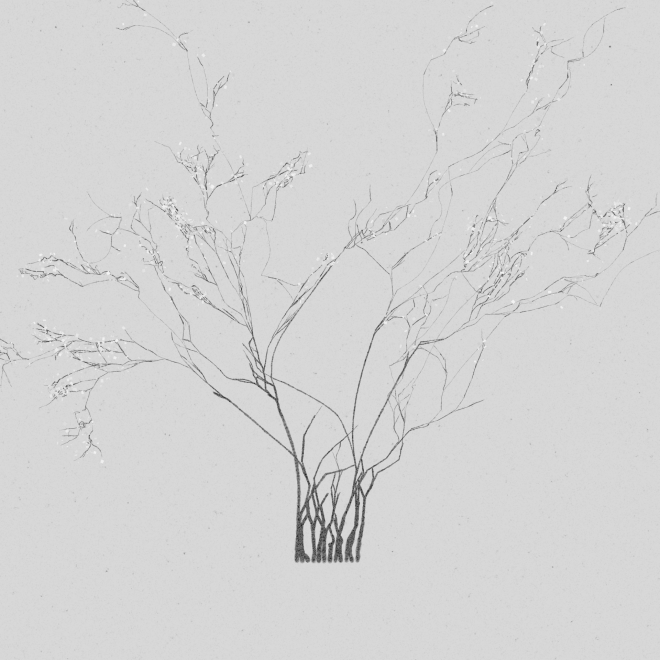
So here is a sizable dump of images from this journey:
And, as I used to do so many years ago, I ended up creating a series of desktop wallpapers as well. These are in 4k (3840×2160) and are intentionally dark and low contrast so as to be easy on the eyes during night hours.
Recently I’ve lost some steam on this project as I’ve been working on some new music, but I’m sure I’ll return to it someday.































































 Josh Barnett